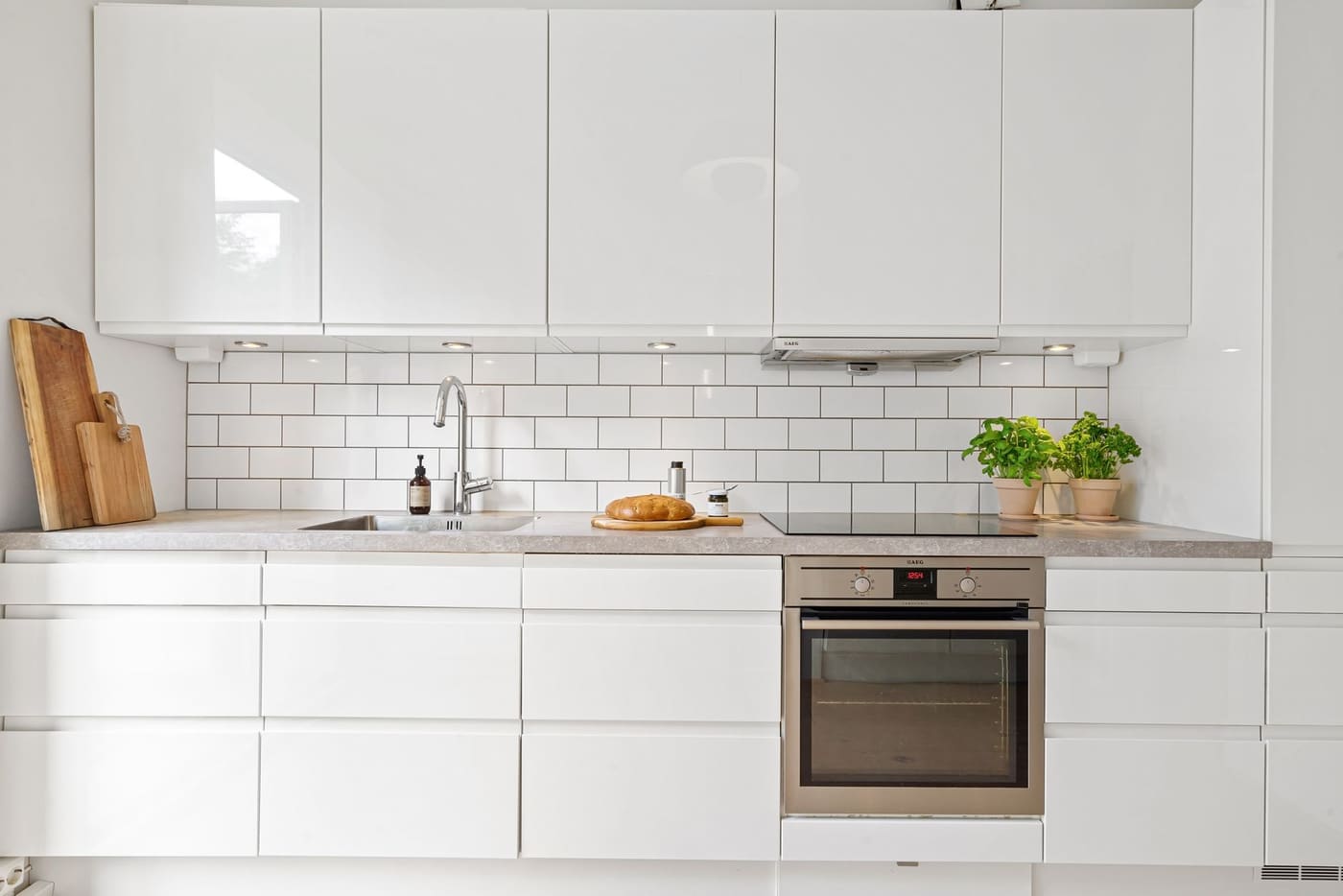
Keep on the counter only what you use at least once a day or what is awkward to move, such as a coffee maker, a cutting board, a utensil crock, and a single small appliance. Put away everything you use weekly or less, plus anything that is only there because it has no better home. A good target is to leave at least 24 to 36 inches of clear, continuous counter for prep.
The counter is your working surface, not storage. Every item you leave out takes space from cooking and makes cleanup harder. The sections below give a simple test, a list of what usually earns a spot, and a plan for the rest.
Use a frequency test
The easiest rule is how often you use something:
| Use frequency | Where it belongs |
|---|---|
| Daily | Counter or within one step of where you use it |
| A few times a week | Easy-reach cabinet or drawer, between knee and shoulder height |
| A few times a month | Lower or higher cabinet, pantry shelf |
| A few times a year | Top shelf, closet, garage, or basement |
Be honest about daily. A stand mixer used for Sunday baking is weekly, not daily, and a heavy one is a strain risk when you lift it. A heavy appliance earns a counter spot only if you use it most days, or if the cabinet alternative would make you skip using it. If you will not lift it, it is not really stored.
One more filter is whether you will actually put it back. A cabinet that requires moving three other items to reach one appliance will fail, and the item will migrate to the counter. Choose the spot you will really use.
What usually earns a counter spot
Most kitchens have a short list of things that belong out:
- A coffee maker or kettle, if you use it every morning. Keep mugs and filters directly above or beside it.
- A cutting board, kept leaning against the backsplash or in a slot so it is ready.
- A utensil crock, holding the five or six tools you grab constantly, such as a spatula, wooden spoon, tongs, and a ladle.
- A dish rack, only if you hand wash daily. A roll-up rack that stores in a drawer is a good swap if you do not.
- A small tray with oil, salt, and pepper, so the basics are at the stove without spreading across the surface.
- A fruit bowl or a plant, because both add warmth and are quick to move.
Everything else needs a case. A toaster is fine if you use it most mornings. A blender might not be if it comes out twice a week and has a cabinet home that is easy to reach.
What should go away
Several categories collect on counters because no one decided where they live:
- Mail, keys, and paperwork. These do not belong in the kitchen. Give them a tray or a hook near the door.
- Knife blocks. They take up more space than they need to. A magnetic wall strip or a drawer tray holds the same knives without using counter. Keep blades out of reach of children.
- Rarely used appliances. Juicers, bread makers, rice cookers, slow cookers, and air fryers you use monthly belong in a cabinet or pantry.
- Bulk food and supplements. Keep these in a pantry or a closed cabinet. Bright packaging adds visual clutter, and sunlight and heat shorten the life of many foods.
- Cleaning supplies. These belong under the sink, and they should be stored out of reach of kids and pets. Never store them next to food.
- Extra mugs, glasses, and spice jars. If you have more than a dozen mugs, donate or store the extras.
Do not leave unrinsed dishes or anything with a food residue on the counter overnight. It attracts pests and adds to the clutter that makes a kitchen feel stressful.
Look at prep-zone friction
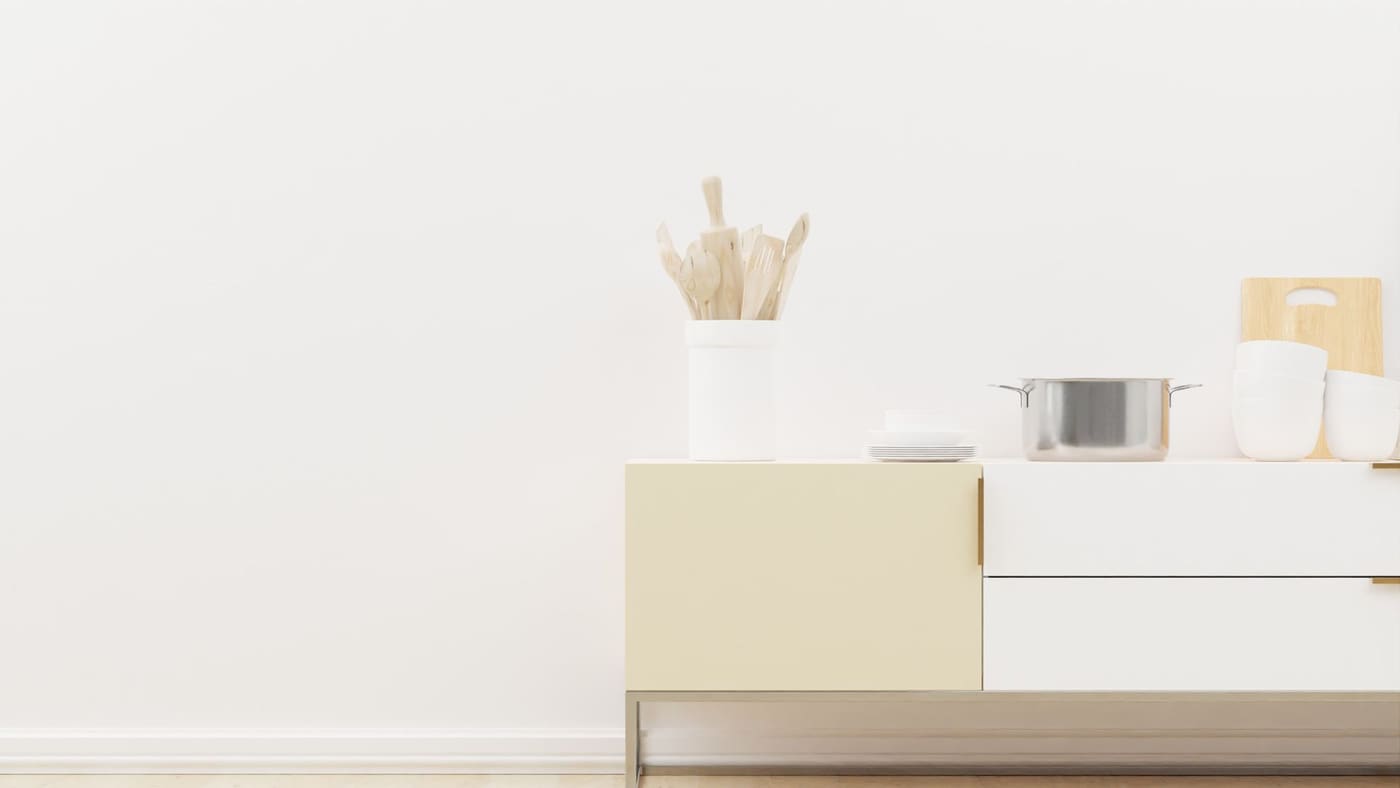
Counter clutter is most costly in the spot where you actually chop and mix, which is usually between the sink and the stove. Treat this zone as a clear zone, and let items collect elsewhere. As a rule of thumb, aim for at least 24 inches of clear, flat counter next to the stove or sink, and ideally 36 inches or more for serious prep. If your kitchen is small, any appliance that eats into this zone should be a candidate to leave.
The principle of keeping tools close to where they are used still applies. A pepper mill by the stove, a cutting board near the sink, and a compost bin close to the prep area save steps. This is part of the larger question of how your kitchen flows, which the guide on what makes a kitchen layout feel easy to use covers in more detail.
Where the displaced items go
Once the counters are clear, you need homes for the extras. Some ways to create them without buying a new cabinet:
- Edit the cabinets first. Remove duplicates and expired or unused items to make room.
- Use vertical space. Shelf risers, over-door racks, a wall rail with hooks, and a tension rod under the sink add capacity for a few dollars each.
- Store small appliances at the edge of a cabinet. Put the heaviest ones at waist height with a slide-out shelf or a shelf liner so they glide out.
- Use a rolling cart. A narrow cart, usually $40 to $150, can hold appliances and keep them movable.
The article on how to add more kitchen storage without a remodel gives a full list. Be careful when an appliance is plugged in near the sink. Keep cords away from water, and use ground-fault-protected outlets near water. If you are unsure about your outlets, ask a licensed electrician rather than guessing.
Appliance safety on the counter
Some counter items need clearance for safety and function:
- Toasters and toaster ovens need space above and around them for heat, and should not sit under a cabinet that can scorch. Check the manual for the clearance.
- Electric kettles and slow cookers should sit where the cord does not hang over a burner or the counter edge.
- Air fryers and pressure cookers vent steam. Keep them out from under cabinets while in use, and do not block their vents.
- Plug-in appliances should not share a power strip. Plug high-wattage appliances such as a toaster, microwave or kettle directly into a wall outlet, and avoid extension cords and power strips for them, as electrical safety guidance generally advises.
If an outlet is warm, discolored, or sparks, stop using it and call an electrician.
Make the counter look intentional
Items that stay out should look like they belong. Group them on a tray, with a few things that match in color or material. A wooden board, a ceramic crock, and a glass jar of baking supplies read as a deliberate arrangement, while a dozen mismatched bottles read as clutter. Keep the heights varied but the number low. A rule of three groupings, such as the coffee station, the cooking station, and one decorative piece, is a useful guide. The article about making a kitchen look better without overdecorating has more styling tips, and it fits well with this editing approach.
A simple reset routine
Counters get cluttered again without a routine, so build in five minutes at the end of the day. Return things to their homes, wipe down the surface, and take away anything that does not belong. Once a month, look at what has crept back and decide whether it deserves to stay or should move. If something keeps migrating to the counter, either its home is wrong or you do not need it.
Where this comes from
This guide is built on common home-organizing practice (a frequency test for what stays out) and on the National Kitchen & Bath Association’s kitchen planning guidelines for counter landing and prep space. Appliance and outlet notes reflect general electrical-safety guidance and manufacturer manuals, which you should follow for clearances. The suggestions are not the result of testing. Prices and product dimensions change, so check them at the source.